

We are thrilled to celebrate three outstanding Transitional Territory’s graduates whose theses have been honoured with major awards this year. Their work expands our understanding of critical environments, spatial justice, and more-than-human futures. We celebrate their intellectual courage, design imagination, and commitment to more just, ecological, and interdependent futures. Here’s to the transformational work yet to come.
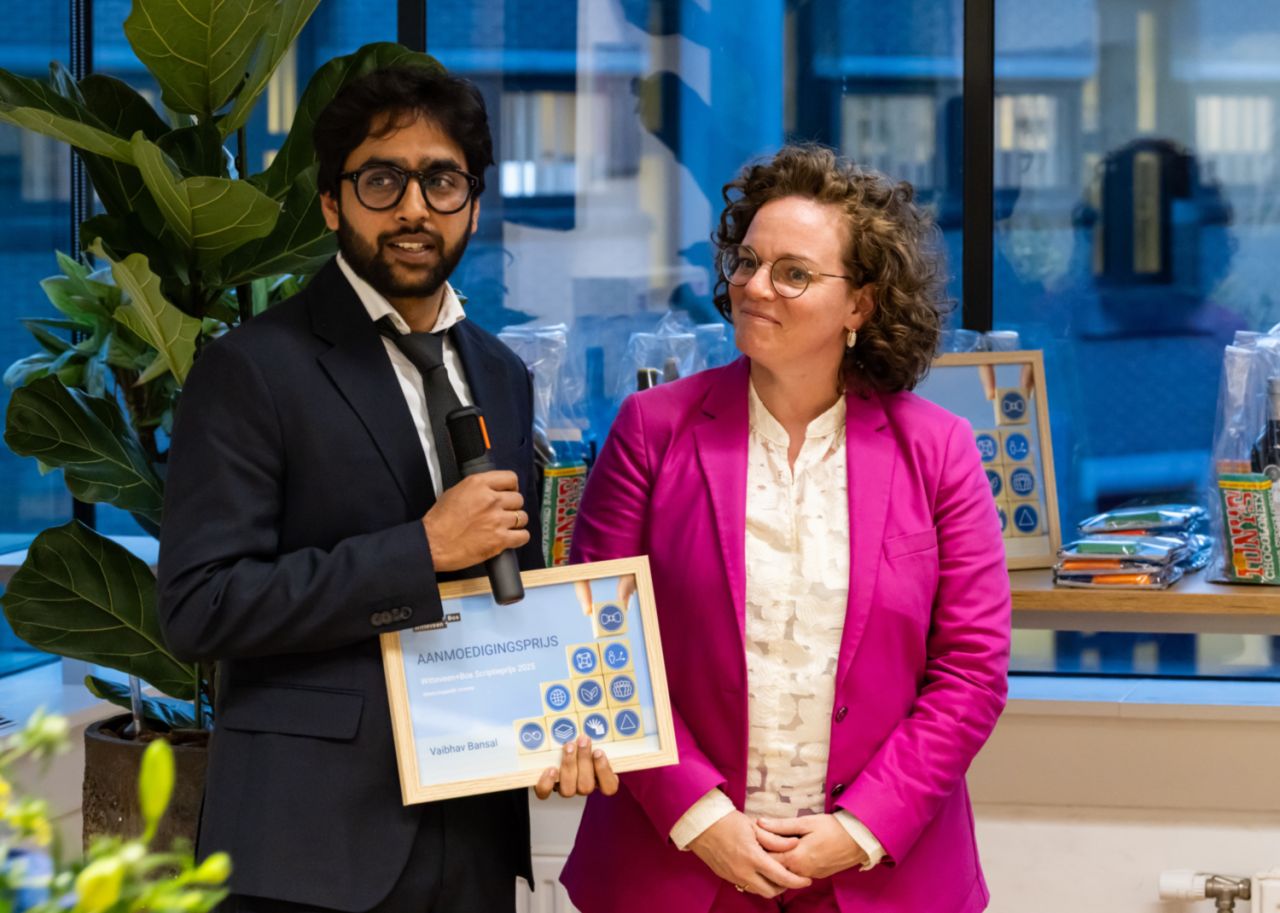
Vaibhav Bansal
Recipient of the Encouragement Award at the Scriptieprijs – de Uitreiking! by Witteveen+Bos.
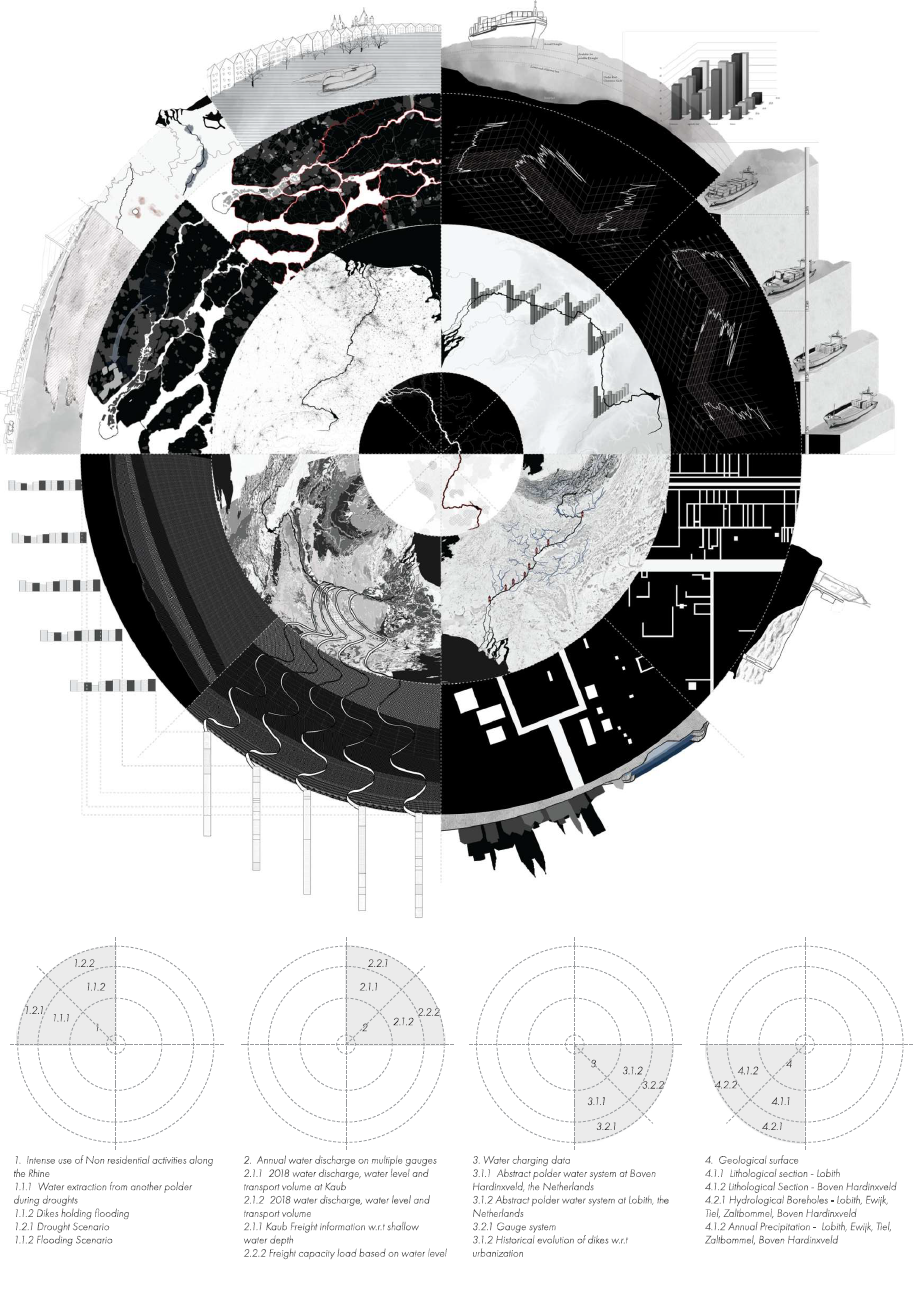
Vaibhav’s research reimagines the Rhine River as both infrastructure and living cultural entity, proposing adaptive strategies—across economy, ecology, and society—to rebalance water systems under intensifying climate pressures. From freight corridors to ecological flow networks, his work offers a framework for climate-responsive, cross-border river basin design.
Supervised by Francesca Rizzeto and Claudiu Forgaci with Johanna Bouma (Mentor Royal HaskoningDHV)
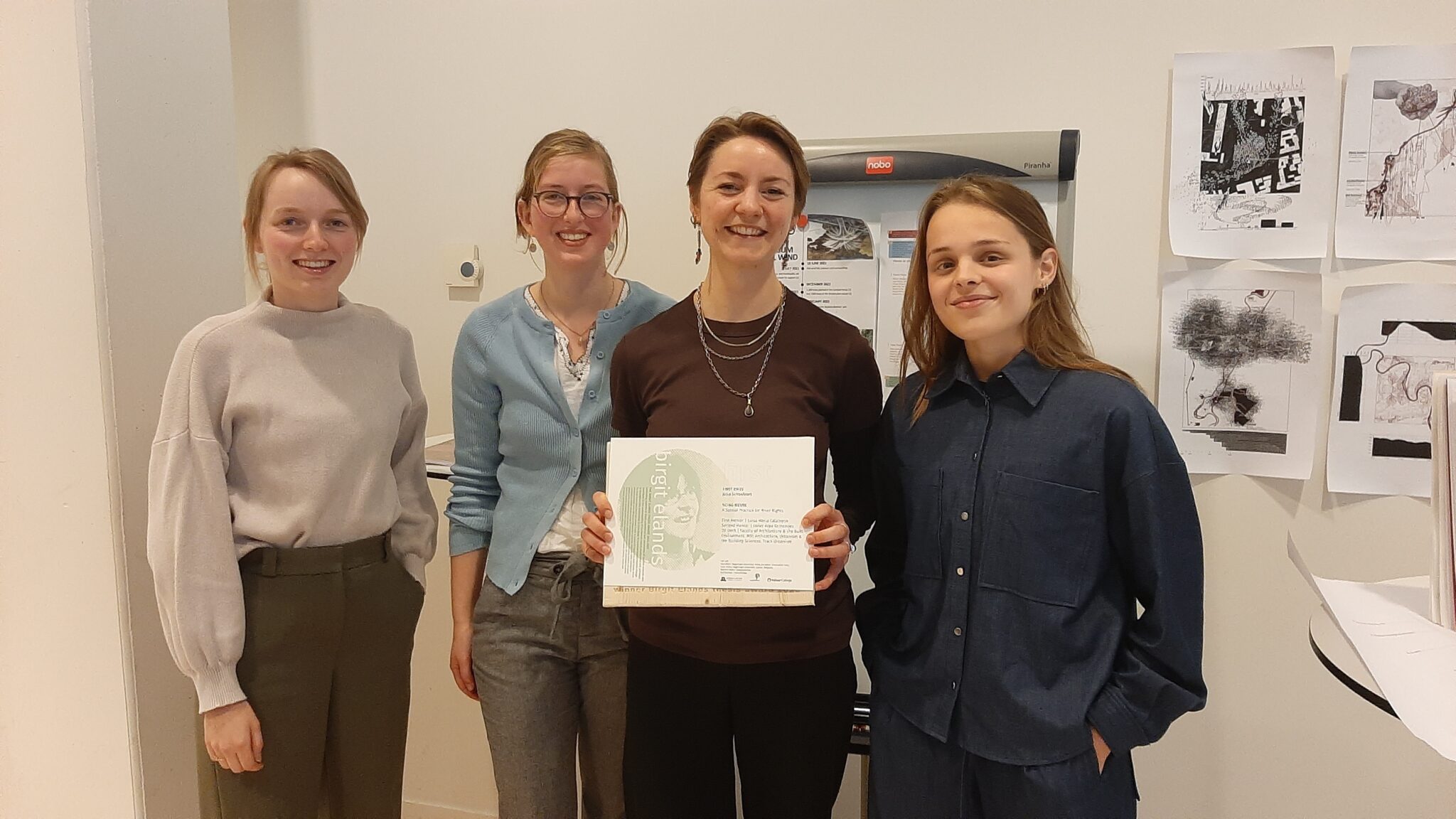
Julia Schasfoort
Being Meuse: A Spatial Practice for River Rights
Winner of the Birgit Elands Thesis Prize.
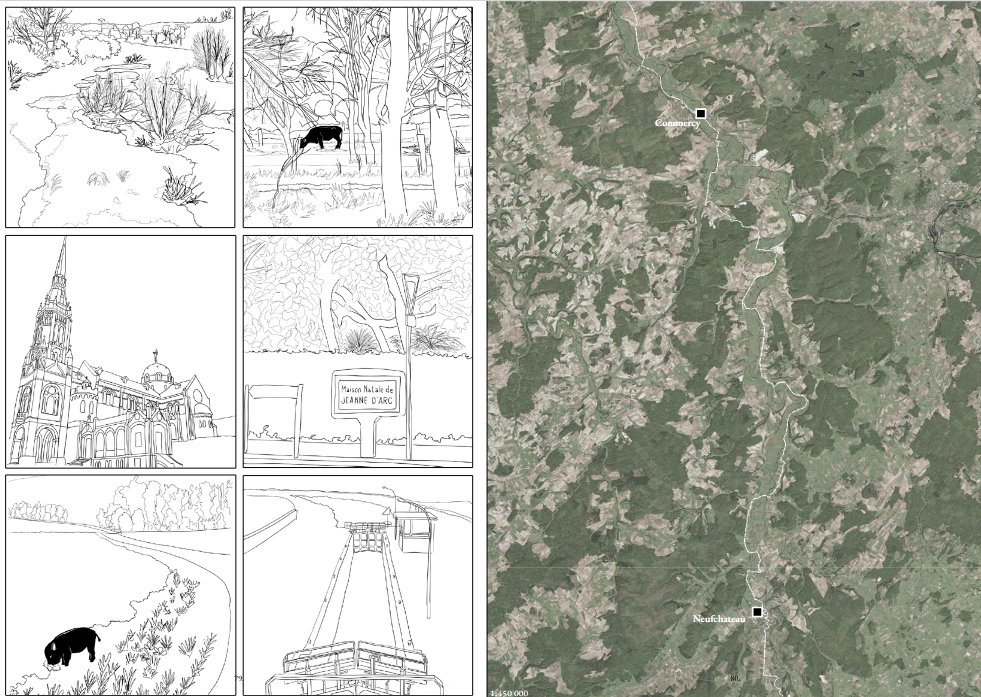
“Julia has produced an exceptionally beautiful thesis, richly illustrated and offering a fresh narrative about the Meuse,” jury member Arjen Buijs remarked. During her fieldwork, Schasfoort cycled about 1,100 kilometres along the river over 16 days, traveling from its source on the French Plateau de Langres to its mouth in the Dutch North Sea. Along the way, she gathered data, collected stories, and conducted interviews. The jury commended her for her strong and innovative research methods.
Supervised by: Luisa Calabrese and Javier Arpa
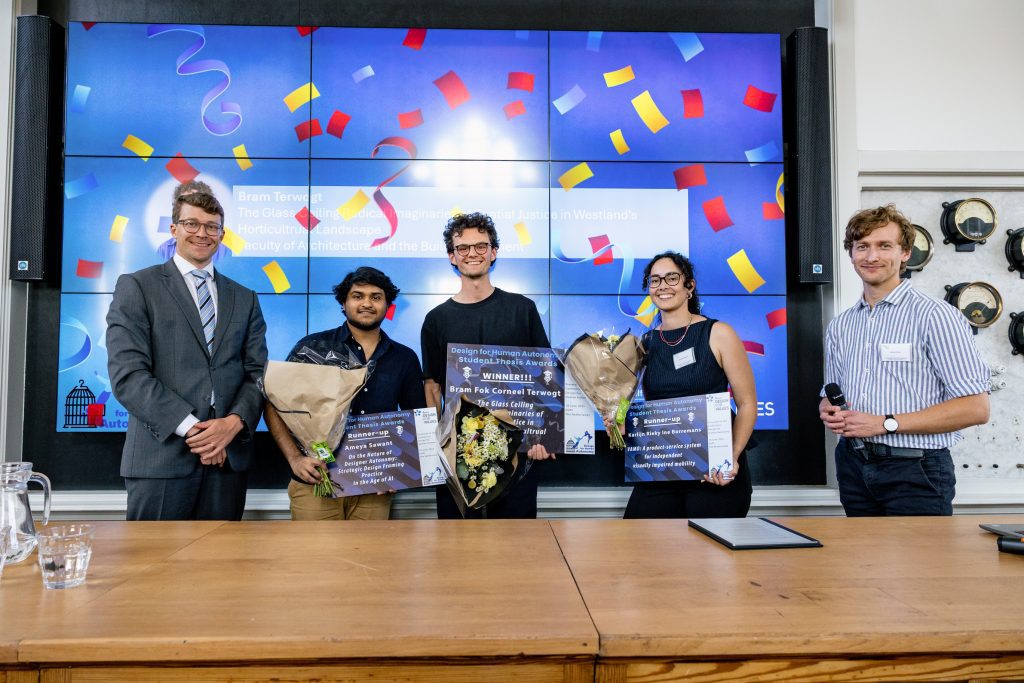
Bram Terwogt
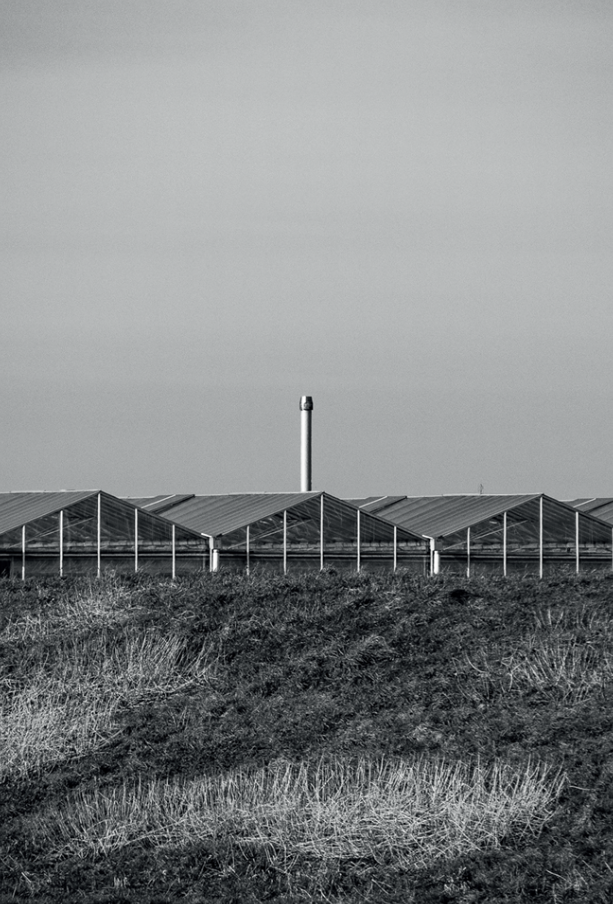
The Glass Ceiling: Radical Imaginaries of Spatial Justice in Westland’s Horticultural Landscape
Awarded Best TU Delft Master Thesis on Design for Human Autonomy by the Delft Design for Values Institute.
Bram investigates the socio-environmental challenges of Westland’s high-tech greenhouse cluster—precarious labour, automation, fossil dependency—and explores “radical imaginaries” for post-industrial, commons-based agricultural futures. His work proposes policy pathways and a speculative spatial project that reconfigures the region toward ecological autonomy, spatial justice, and democratic agri-food systems.
Supervised by Víctor Muñoz Sanz and Juliana Gonçalves